
Pet Diagnostics inLos Angeles, CA
Using in-house testing and advanced diagnostic tools, we work to identify health concerns efficiently so treatment can begin as soon as possible.
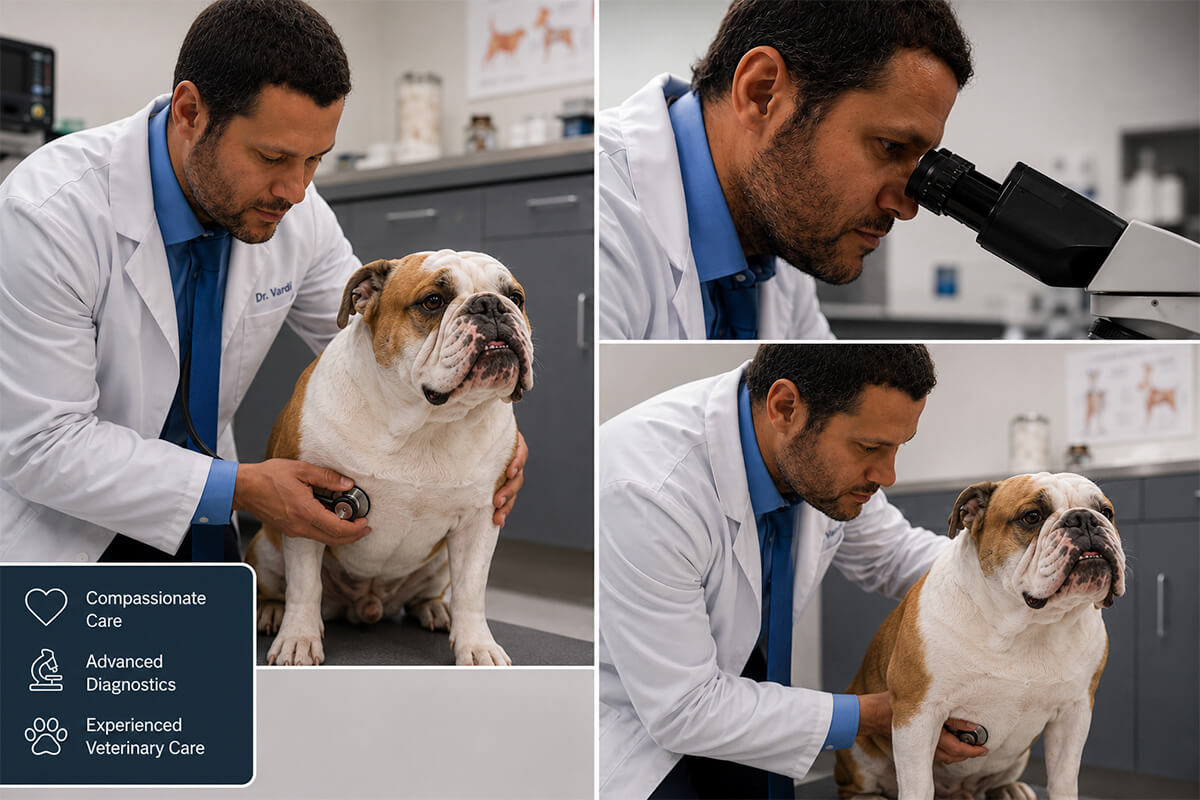
Advanced Testing to Help Identify Illness, Injury, and Underlying Health Concerns
When pets are sick, injured, or showing unexplained symptoms, diagnostic testing helps our veterinary team find answers and guide the next steps in care. At Larchmont Animal Hospital + Urgent Care, we offer pet diagnostics in Los Angeles, CA to evaluate a wide range of medical conditions in dogs and cats.
What Are Veterinary Diagnostics?
Veterinary diagnostics include the tests and imaging tools used to assess your pet’s health beyond what can be learned from a physical exam alone. These services help us evaluate internal organs, detect disease, monitor ongoing conditions, and better understand the cause of your pet’s symptoms.
Depending on your pet’s needs, diagnostic testing may be recommended for concerns involving:
- Vomiting or diarrhea
- Coughing or breathing changes
- Weakness or lethargy
- Pain or limping
- Loss of appetite
- Changes in urination or bowel movements
- Abdominal discomfort
- Heart-related concerns
- Unexplained illness or chronic health changes

Diagnostic Services We Offer
Our diagnostic capabilities may include:
- Digital radiography (X-rays)
- In-house laboratory testing
- Abdominal ultrasound
- Echocardiography
- Additional testing based on your pet’s symptoms and medical history
These tools allow our team to gather important information and make informed medical recommendations.
Diagnostic Imaging
Diagnostic imaging allows veterinarians to evaluate internal structures that cannot be assessed through physical examination alone.
Digital radiography (X-rays) allows us to quickly evaluate the bones, lungs, heart, and abdominal organs. Because images are digital, they can be reviewed immediately and shared with specialists when needed.
Imaging is often used to diagnose:
- Fractures and orthopedic injuries
- Heart and lung disease
- Gastrointestinal obstruction
- Abdominal abnormalities
- Certain types of tumors
Rapid imaging helps us make faster and more accurate medical decisions.


Abdominal Ultrasound
Abdominal ultrasound is a non-invasive imaging technique that allows us to visualize internal organs such as the liver, spleen, kidneys, intestines, bladder, and pancreas in real time.
Unlike X-rays, ultrasound allows us to evaluate the internal structure of organs and identify abnormalities such as masses, inflammation, fluid accumulation, or structural changes.
Ultrasound can often help diagnose conditions that might otherwise require exploratory surgery.
In some cases, ultrasound can also be used to guide minimally invasive procedures such as needle aspirates or biopsies.
CT – Computed Tomography (By Appointment Only)
CT, or computed tomography, is an advanced imaging tool that provides detailed cross-sectional images of the body. This type of imaging can be especially useful when evaluating complex conditions that require a more advanced level of detail than standard radiographs.
CT imaging may be recommended in select cases to help assess certain injuries, internal abnormalities, or other conditions requiring advanced diagnostic evaluation.
CT is available by appointment only.

In-House Laboratory Diagnostics
Our hospital utilizes modern in-house laboratory equipment that allows us to perform many diagnostic tests rapidly.
Common tests include:
- Complete blood counts
- Blood chemistry panels
- Urinalysis
- Cytology
- Coagulation testing
- Hormonal testing
- Infectious disease testing
Having these tests available in-house allows us to obtain results quickly, which can be critical when pets are sick or when diagnostics are needed prior to anesthesia or surgery.
For more specialized testing and/or in non-urgent cases, samples can also be submitted to reference laboratories.
Echocardiography (Heart Ultrasound)
Echocardiography is a specialized ultrasound used to evaluate the heart.
This test allows us to assess:
- Heart chamber size
- Heart muscle function
- Valve structure and function
- Blood flow patterns within the heart
Echocardiography is particularly useful for patients with heart murmurs, suspected heart disease, breathing difficulties, or exercise intolerance.
This imaging allows veterinarians to diagnose heart conditions and guide appropriate treatment.
Fast Answers, Coordinated Care
Timely diagnostics can make a meaningful difference in your pet’s care. By offering multiple diagnostic services within our hospital, we can evaluate many concerns more efficiently and develop a treatment plan based on clearer clinical information.